Commercial auto insuranceThe truck is
a job site.
Commercial auto insurance covers the trucks and vans your business owns or uses, the people driving them, and the damage they can do on the road. If your pickup hauls ladders and lumber to jobs all over Long Island five days a week, a personal auto policy was never built for it.
Why a personal policy can deny the claim
Personal auto policies are priced for commuting and errands. Most of them exclude or limit coverage when a vehicle is used mainly for business, owned by a company, or driven by employees. The truck can look exactly the same either way. What changes is how it gets used.
Here is where contractors get caught. The pickup is titled to the LLC but insured on a personal policy. A helper is driving it to the supply house. The bed is full of materials for a paying job. Any one of those facts can give the carrier a reason to question the claim after an accident, and that is the worst time to find out.
A commercial policy is written for how the vehicle actually works. It names the business, lists the drivers, and is built around job sites, supply runs, and trailers.
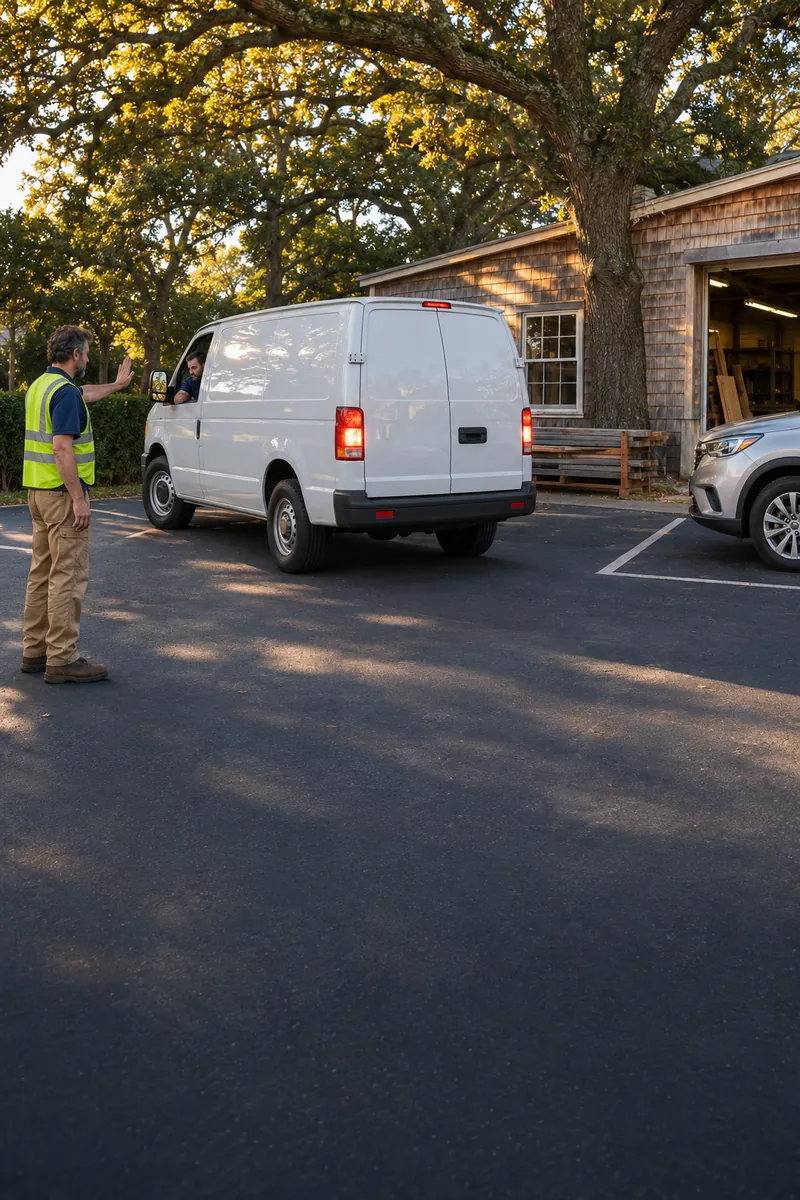 One bad backup

The core of a commercial auto policy
Most policies are built from the same parts. The limits and deductibles on each one are where the real decisions get made.
Liability
Injuries and property damage your driver causes to other people. New York requires liability on every registered vehicle, and a loaded work truck can cause a lot of damage. Higher limits are common for contractors.
No-fault and uninsured motorist
New York also requires no-fault (PIP) for medical bills and lost wages after a crash, plus uninsured motorist coverage for when the other driver has no insurance.
Physical damage
Collision and other-than-collision coverage pay to repair or replace your own vehicle after a crash, theft, fire, vandalism, or a tree limb through the windshield. Lenders on financed trucks usually require it.
Hired and non-owned
Liability for vehicles you rent and for employees driving their own cars on company business. Added to the policy or written on its own.
The car you do not own can still get you sued
Your foreman takes his own pickup to grab fittings. Your office manager drives to the bank. You rent a box truck for a week on a big job. If any of them hits someone, the injured person will look at your business, not only at the driver.
Hired and non-owned auto coverage picks up liability in those situations. It does not repair the employee's own car, and it does not replace the employee's personal policy. Small businesses with no company vehicles at all often still need it, and many GCs and commercial clients ask for it on the certificate.
Eric and the Specialized Insurance team saved me a ton on my commercial auto policy. I wish I had come to them years ago. Thanks, guys! You said you could lower our costs and you did.

Who is behind the wheel matters
Carriers price commercial auto as much on the drivers as on the trucks. Every driver is part of the application.
Driving records
Carriers pull motor vehicle records on listed drivers. Recent tickets, accidents, or license suspensions raise the price, and some drivers can be excluded altogether.
New hires
Tell us before a new employee takes a truck out. A driver who is not on the policy, or who would not have been accepted, can turn a routine claim into a fight.
Young or inexperienced drivers
Younger drivers usually cost more to insure. Some carriers have age minimums for commercial vehicles, which is one reason we shop more than one.
Family members
A spouse or kid using the work truck on the weekend needs to be part of the conversation. Personal use of a company vehicle is a common gap.
Equipment on the truck is a separate policy
Contractors are often surprised that the auto policy stops at the vehicle. Here is who usually pays for what after a bad day.
| What happened | Usually paid by |
|---|---|
| Your van is totaled in a crash | Commercial auto physical damage (collision) |
| Your driver injures someone in another car | Commercial auto liability |
| Someone breaks in and steals the tools from the bed | Tools and equipment (inland marine) coverage, written under your contractors insurance |
| Your employee is hurt in the crash | Workers compensation, not the auto policy |
| A ladder flies off the rack and hits a car behind you | Commercial auto liability (the load is part of the vehicle in use) |
| Permanently mounted racks, toolboxes, or a lift gate are damaged | Often the auto policy, if the equipment was declared. We confirm it in writing. |
What affects your commercial auto price
One fleet, several quotes
Send us your vehicle list with VINs, your driver list with license numbers, and your current declarations page. We check how each vehicle is titled and used, whether the right drivers are listed, and whether your liability limits match what your contracts ask for. Then we take it to several top rated carriers that write work trucks on Long Island and bring the options back side by side.
Many clients also tie the auto program into their business insurance and an umbrella, so one higher limit sits over the trucks and the general liability together.
Sometimes, for a light pickup used only by you with occasional work use. Once the truck is titled to the business, driven by employees, carries signage, or hauls tools and materials daily, most personal carriers will want it on a commercial policy. Guessing wrong can mean a denied claim.
Usually not. The policy covers the vehicle and the liability from driving it. Tools and equipment inside the truck need their own coverage, typically an inland marine or tools and equipment policy. Permanently attached equipment may be covered as part of the vehicle if it is declared.
Anyone who drives your vehicles regularly should be listed so the carrier can review their record. Leaving a regular driver off can create problems at claim time. Let us know when someone new starts driving.
Often, yes. If employees ever drive their own cars for work or you rent vehicles, your business can be pulled into a lawsuit after an accident. It can usually be added to a business policy you already carry, and some clients require it before you start work.
Trailers should be listed on the policy. A trailer you tow can cause liability on its own, and physical damage to the trailer itself is covered only if it is scheduled with that coverage.
Get your trucks quoted.
Send the vehicle and driver list, or call and read it to us. We will check the setup and shop it with several carriers.
- Several top rated carriers, one application
- Plain English options side by side
- Free review of what you carry now
Get your quote
Tell us what you need covered. Someone from our Patchogue office will follow up, usually by phone.